
Sunday September 28, 2025
Open the Door
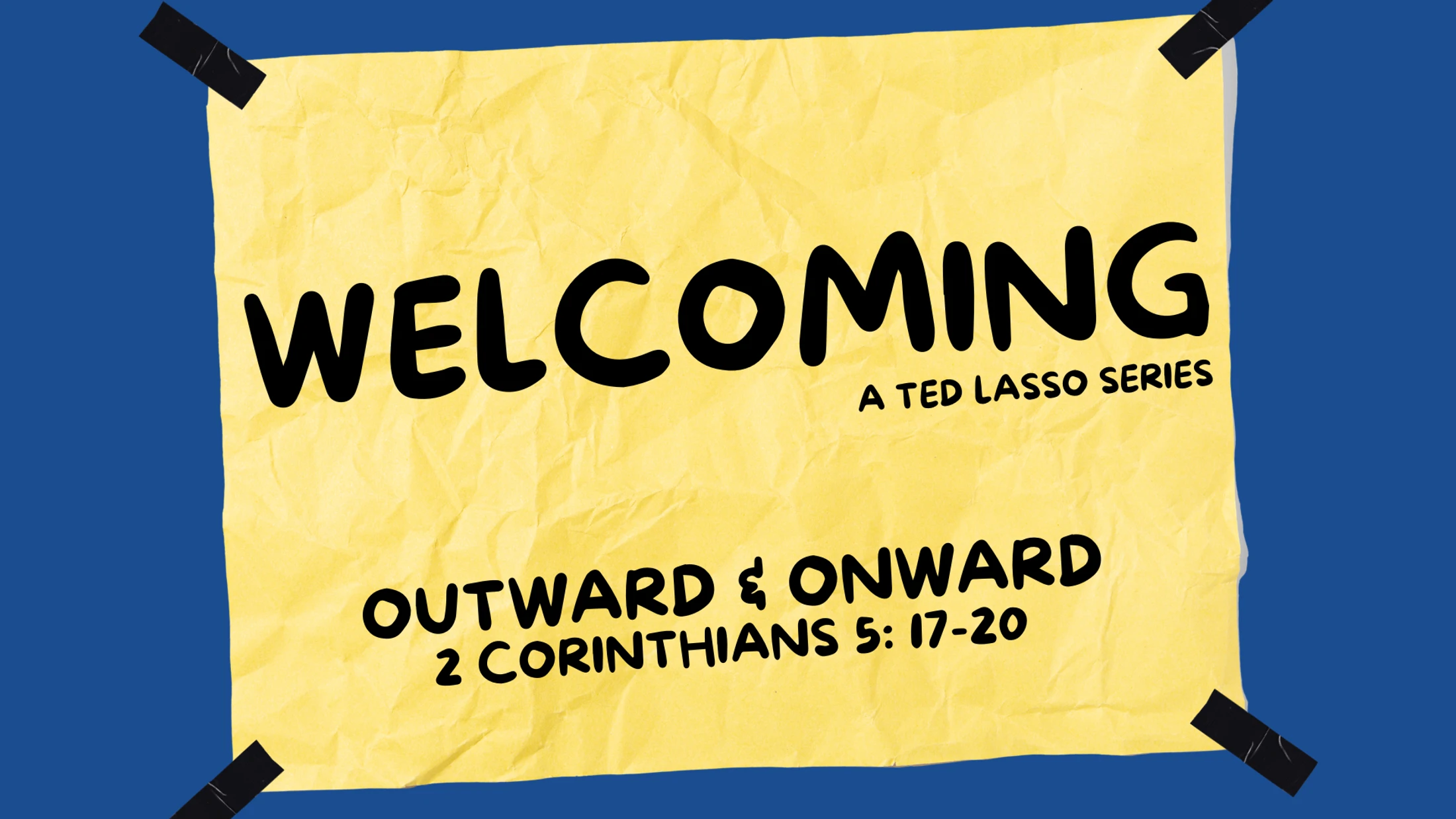
Second Corinthians 5:17–20 offers a powerful vision of Christian identity and mission. “If anyone is in Christ, there is new creation.” God has reconciled us to Himself through Christ and entrusted us with the ministry of reconciliation. These words move welcome beyond handshakes and into a way of life that carries grace outward into the world.
This sermon pairs Paul’s words with a scene from Ted Lasso (Season 2, Episode 8). After Jamie is publicly humiliated by his father in the locker room, Roy crosses the space and embraces him without a word. That act of steady presence shows the entire room what care looks like when it costs something. In the same way, reconciliation in Christ asks us to move toward pain and need, even when it requires attention, comfort, or reputation.
Paul describes both the source and the assignment. God moved first in Christ, not counting our trespasses against us. That reconciliation becomes the pattern for our lives. Reconciled people become reconciling people. We live as ambassadors; those who represent the Kingdom in the ordinary settings of life. Ambassadors do not hide in compounds. They move with presence and patience, speaking in ways people can hear, and showing the character of the King they represent.
For churches, this calling takes visible form. Hospitality cannot stay sentimental. It must be supported by systems that help people breathe and belong. Safe and simple family check-ins, seating that leaves space, trained hosts who guide rather than hover, translation or hearing assistance where needed, and follow-up that treats names as gifts; all of these choices are spiritual practices. They remove barriers so that the gospel can be heard.
Paul also makes the invitation personal: “Be reconciled to God.” Before we carry reconciliation outward, we must receive it ourselves. Grace cannot move through us if it has not first taken root in us. When we belong to Christ, our lives are freed to carry His welcome outward with authenticity and care.
Outward and onward is not a program. It is the everyday shape of discipleship. It looks like returning a phone call, delivering a meal, offering a ride, inviting a neighbor to sit with you, or even stepping into children’s ministry so families feel seen. These small acts become the ordinary roads along which reconciliation travels.
The charge is clear: go as ambassadors. Let your presence be steady and your words be bridges. Create margin in your calendars and room at your tables. Build church systems that match the gospel you proclaim. God is making His appeal through us. Outward and onward is how reconciled people live.