
Sunday March 15, 2026
This video is hosted by YouTube. Playing it loads content from YouTube, which may set cookies.
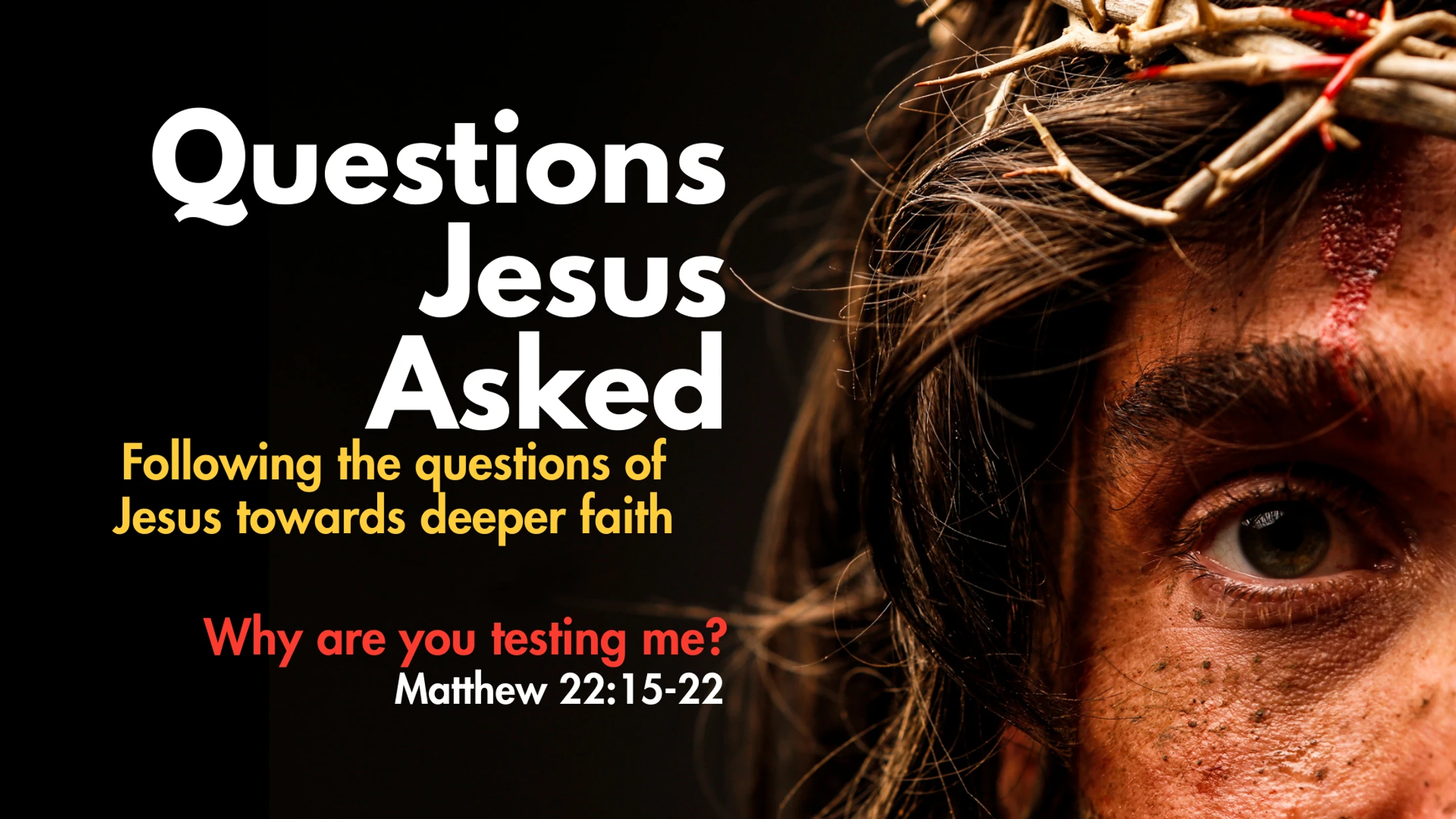
Why Are you testing me?
This Sunday marks the fourth week of Lent and continues the series Questions Jesus Asked. Two weeks ago we sat with the question Jesus posed to Peter: "Who do you say that I am?" Last week we turned to a question Jesus asked twice in Mark 10: "What do you want me to do for you?" This week we encounter a different kind of question. It's not an invitation to confession or an exposure of longing. It's a question Jesus asks because he sees right through what's happening: "Why are you testing me?"
Pastor Joel opened with a reflection on customer service surveys. If you've ever called tech support, you know how the end of the call goes. Whether the issue was resolved or not, you hear some version of this: "Would you be willing to stay on the line for a brief survey about your experience today?" He takes those surveys, especially when the representative has been outstanding. But sometimes he wonders: Does anyone actually read this? Is this a real question, or just a formality?
Some questions are real. They want an answer. They're open to what you have to say. Other questions are performances. They look like they want to know, but they've already decided.
In Matthew 22, a group of religious leaders comes to Jesus with a question. On the surface it looks like a sincere request for his wisdom. They even open with compliments: "Teacher, we know that you are sincere, and teach the way of God in accordance with truth." Every word is true, and yet the intent behind it is poison. They're using praise as a weapon.
Then comes the question: "Is it lawful to pay taxes to the emperor, or not?"
The question was designed as a trap with no escape. The Pharisees and Herodians, two groups who normally wouldn't share a table, have teamed up for an ambush. If Jesus says yes, pay the tax, he looks like a Roman sympathizer. If he says no, the Herodians report him as a rebel inciting sedition. Either answer destroys him. The question is rigged.
But Jesus perceives their malice. He doesn't answer immediately. He calls out what's happening: "Why are you putting me to the test, you hypocrites?" The word for "test" here carries the weight of temptation. It's the same word used when Satan tested Jesus in the wilderness. This is a spiritual assault dressed in religious language.
Then Jesus asks for a coin. They produce a denarius. He holds it up and asks whose image is on it. Caesar's. And then he delivers his verdict: "Give therefore to the emperor the things that are the emperor's, and to God the things that are God's."
Jesus refuses to be trapped in a binary because the question itself was built on false assumptions. The coin bears Caesar's image. It came from his mint. Give it back. But you bear God's image. You were formed in his likeness. You carry his inscription on your soul. The deeper question is what you owe to the One whose image you carry.
Matthew tells us that when they heard this, they were amazed. But not transformed. They marveled at his answer, but they did not follow him. This is the tragedy of performative religion. We can approach Jesus with all the right words and frame our questions carefully. But if our hearts have already decided, if our questions are a test rather than genuine seeking, we will walk away empty.
This week, examine the questions you bring to God in prayer. Are they open, or already answered? Ask God to reveal the places where you've been performing rather than pursuing. Jesus sees through the performance. He always has. But he doesn't turn us away. He answered the Pharisees even though he knew their motives were corrupt. He's not afraid of our games. He just wants us to stop playing them.
Bring him the real questions. The ones you don't already have answers for. Come to him not with tests, but with trust.