
Sunday March 8, 2026
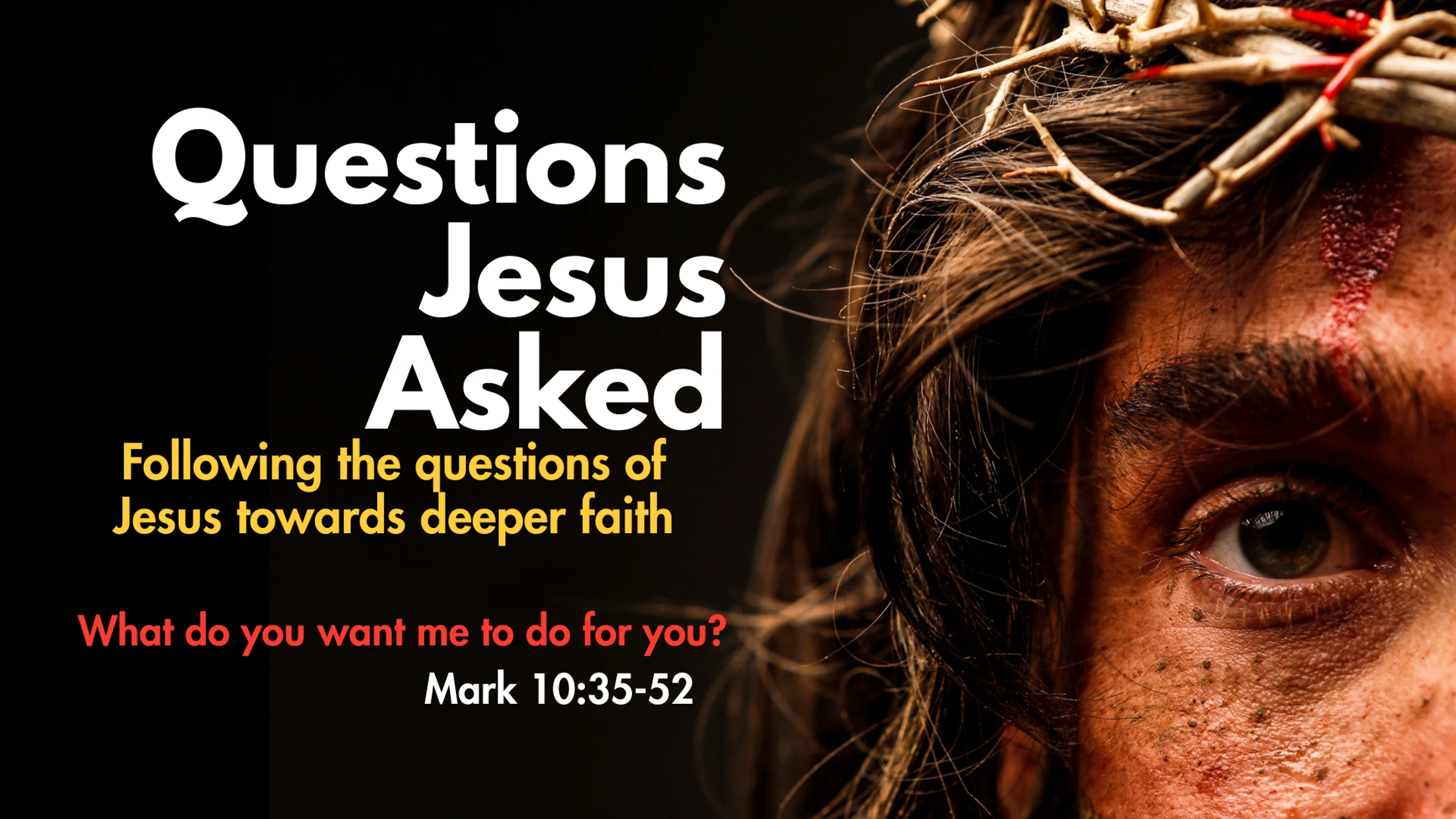
What do you want me to do for you?
This Sunday marks the third week of Lent and continues the series Questions Jesus Asked. Last week we sat with the question Jesus posed to Peter: "Who do you say that I am?" This week we turn to a different question, one Jesus asks twice in Mark 10 to two very different groups of people: "What do you want me to do for you?"
Pastor Joel opened with a confession. Texas Roadhouse is the family's go-to restaurant. In 2025 alone, they went 20 times. This year they've already been 5 times. You'd think ordering would be simple by now. But every time they sit down, the same routine happens. Peyton grabs the rolls and passes them out with the cinnamon butter. Joel knows exactly what he wants. The only thing that changes is the weight of the steak. Peyton is usually quick to decide. And Candice, despite ordering roughly the same thing every time, will look that menu over like it's the first time she's ever eaten there.
The moment someone asks "What do you want?" reveals something. It reveals what we've been thinking about. Maybe what we're hoping for. Whatever it is, the question surfaces what's been sitting just beneath.
In Mark 10, Jesus asks this question to two very different groups. First to James and John, two of his closest disciples. They come with their mother and ask for seats at his right and left in glory. Jesus has just told them for the third time that he's going to suffer, be rejected, and be killed. And while he's been describing the cup of judgment he's about to drink, they've been measuring the seats in the coming kingdom.
Jesus doesn't give them a blank check. He asks, "What is it you want me to do for you?" Their answer reveals everything. They want position. Proximity to power. Jesus tells them plainly: "You do not know what you are asking." He asks if they're able to drink the cup he's about to drink. They say yes. They probably mean it. But they don't yet understand what they're agreeing to.
The other ten disciples hear about this and they're furious. But not because the request was inappropriate. They're angry because James and John got there first. The same ambition was living in all of them. So Jesus gathers the whole group and reframes the conversation. In the kingdom he's building, greatness doesn't look like domination. It looks like service. He's walking toward a cross, not a throne.
Then the scene shifts. Jesus arrives at Jericho, and as they're leaving the city, a blind beggar named Bartimaeus sits by the roadside. When he hears Jesus is passing by, he starts shouting. The crowd tries to silence him. He shouts louder. Jesus stops and asks the same question: "What do you want me to do for you?" Bartimaeus doesn't ask for a seat at the right hand. He says, "My teacher, let me see again."
Same question. Two very different answers. James and John had been thinking about glory. Bartimaeus had been thinking about mercy. One request came from ambition. The other came from need.
Jesus didn't rebuke James and John for asking. The timing was terrible, and the request revealed how much they still didn't understand. But he used the moment to teach them something about what greatness actually looks like. He honored Bartimaeus' request immediately, because it came from a place of honest desperation. Bartimaeus knew what he lacked. He knew he couldn't fix it himself. And when Jesus asked what he wanted, he told the truth.
This week, bring an honest request to God. Not a polished one. The real one. Examine what you're asking for. Are you asking for position, or for wholeness? For elevation, or for mercy? Don't ask for a throne when what you need is healing. Come with your real request. He can handle it.