
Sunday March 1, 2026
This video is hosted by YouTube. Playing it loads content from YouTube, which may set cookies.
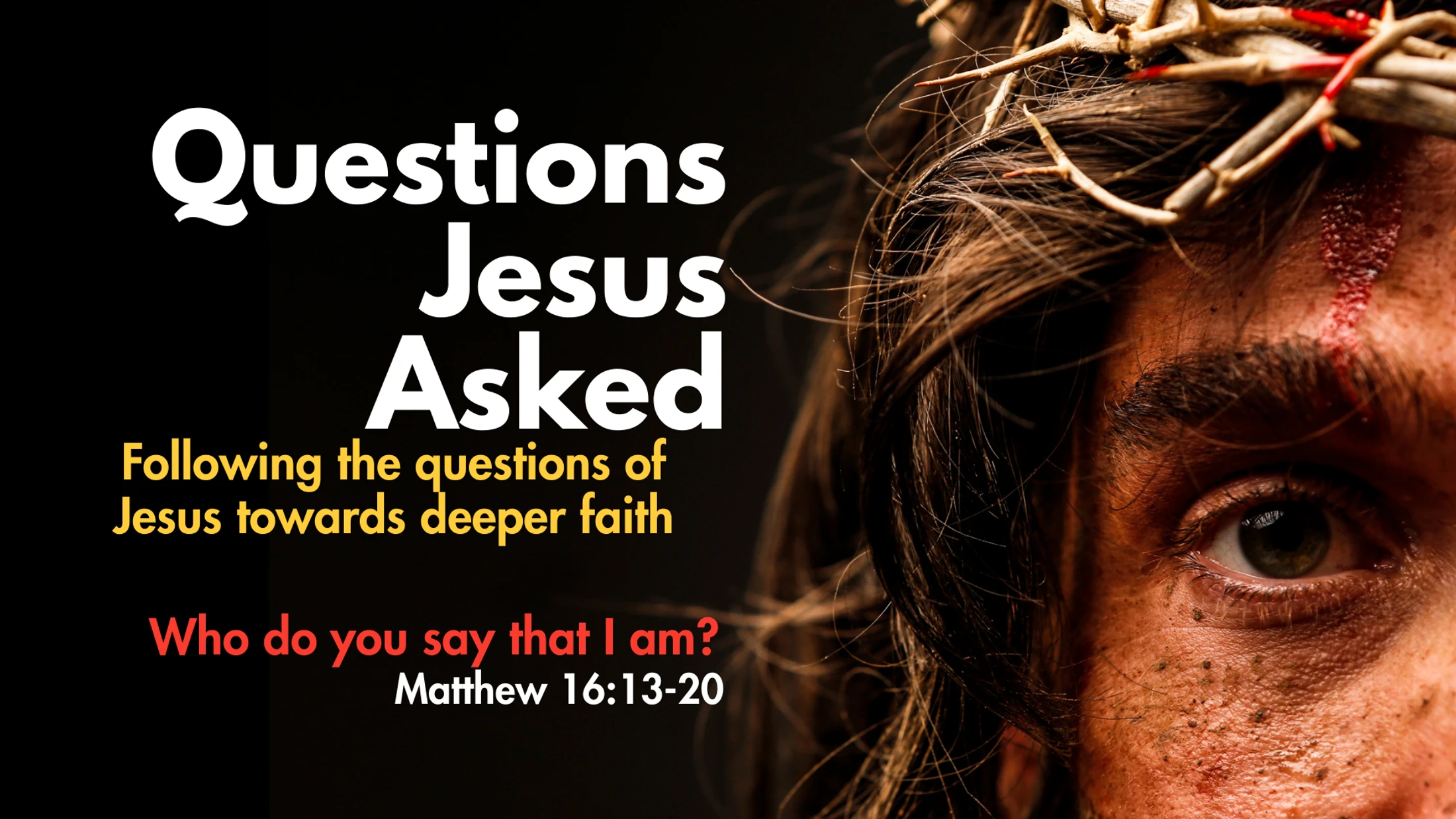
Who do you say that I am?
This Sunday marks the second week of Lent and the beginning of a new series called Questions Jesus Asked. Over the coming weeks, we'll listen to the questions Jesus posed on his way to the cross. These aren't trivia questions or rhetorical devices. They're invitations. They call for honesty, reflection, and response.
This week's question comes from Matthew 16: "Who do you say that I am?"
Pastor Joel opened with a story from a family vacation to San Antonio last year. Growing up, he had learned about the Alamo in every American History class. The pictures in textbooks show a large structure defended for 13 days before falling. Even the movies make the grounds seem as large as a small city. But when his family walked the grounds, that mental image was shattered.
The full size of the Alamo is only 5 acres. As a visual, take four football fields and stack them longways. It takes about two minutes to walk from one end to the other. Standing there, it becomes clear how hard it was for 260 Texans to defend such a small area against 1,500 trained soldiers. You can study something your whole life and still not really know it.
The crowds in Jesus' day had studied the scriptures. They had categories for who Jesus might be. They could place him alongside Elijah, Jeremiah, John the Baptist. But categories aren't the same as confession. Comparison isn't the same as encounter.
Jesus takes his disciples far north to Caesarea Philippi. Gentile territory. A place with a temple to Caesar Augustus and a long history of pagan worship. Away from the crowds, the religious center, and the scribes who had already made up their minds, Jesus asks his closest followers what they really believe.
He starts with a safer question: "Who do people say that the Son of Man is?" The disciples report what they've heard. Some say John the Baptist. Others say Elijah. Still others say Jeremiah or one of the prophets. These are not insults. But every answer is secondhand. Every answer fits Jesus into an existing framework.
Then comes the shift: "But who do you say that I am?" The "you" is emphatic. Jesus is no longer asking for a report on public opinion. He's asking for a personal confession.
Peter answers: "You are the Messiah, the Son of the living God." He doesn't offer a category. He offers a confession. Jesus responds: "Blessed are you, Simon son of Jonah! For flesh and blood has not revealed this to you, but my Father in heaven."
The crowd had information. Peter had revelation. True knowledge of Jesus is not inherited or studied into existence. It is revealed. You can learn every story about Jesus. You can memorize the creeds and recite the verses. But until the Father opens your eyes and you see him for who he is, it remains secondhand.
The question Jesus asked that day has never stopped being asked. Every generation faces it. Every person who encounters the story of Jesus must eventually answer it. Not what the scholars say. Not what your tradition teaches. What do you say?
This Lent, the invitation is to move from information to encounter. Read the Gospels not to learn about Jesus, but to meet him. When he asks the question, answer it. Not with what you've heard. With what you know.