
Sunday February 15, 2026
This video is hosted by YouTube. Playing it loads content from YouTube, which may set cookies.
What am I Missing?
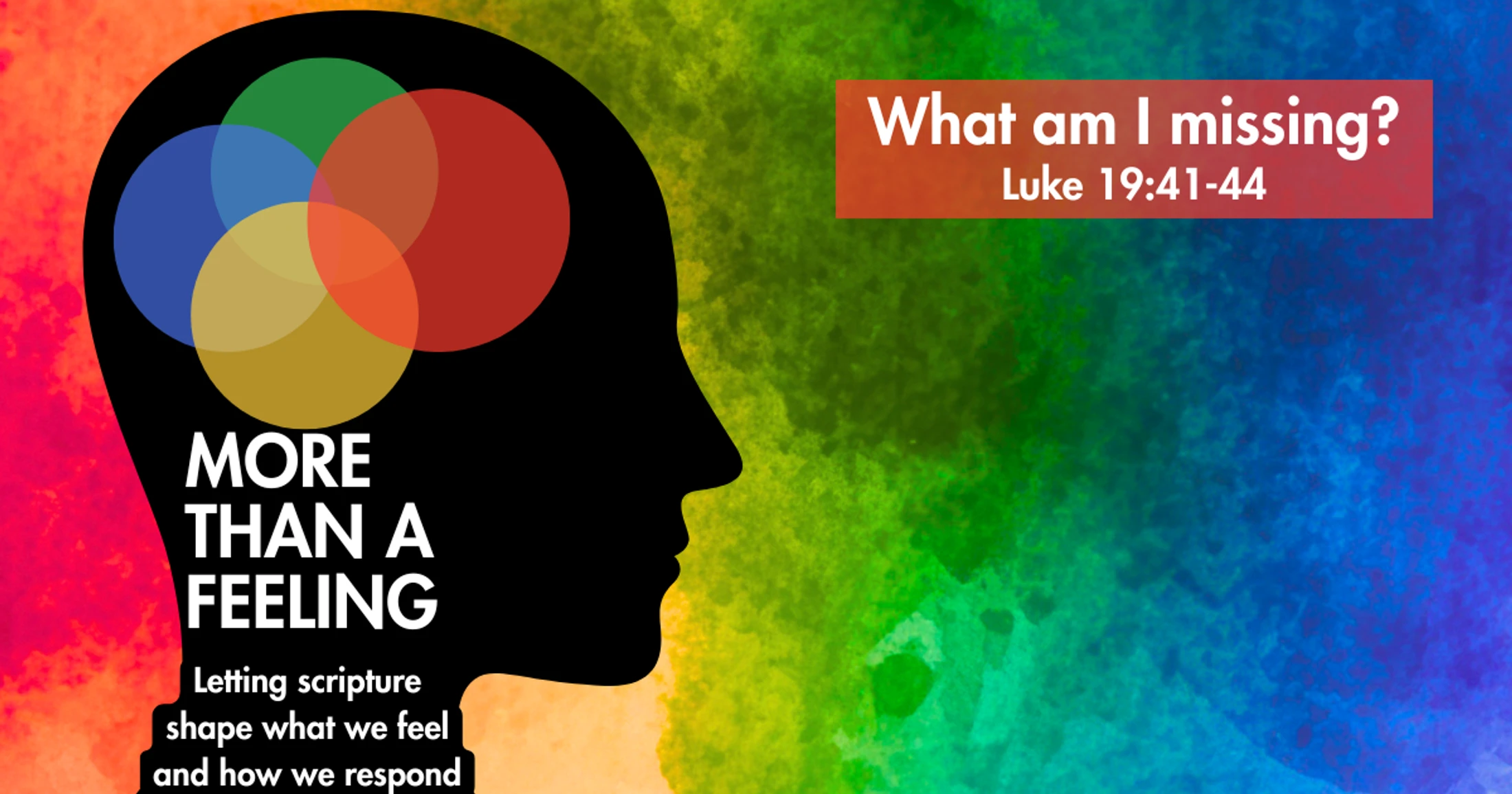
This Sunday's message concluded the More Than a Feeling series with a third question: What am I missing? The first week asked, "What am I feeling?" That was about awareness. The second week asked, "How do I handle this?" That was about discernment. This week moves to a question about seeing clearly.
Pastor Joel opened with a story from this past Tuesday. He had a slow leak in one of his tires and finally took it in to get looked at. While waiting, a service rep told him about a fundraiser supporting a children's hospital. Joel's total was around $62.08. He said, "Let's make it a flat 65 with the donation," meaning he wanted to round up by about $2.92. The rep heard something different. He brought over a donation slip with "$65.00" written at the top. Panic set in. Nobody wants to be the guy who takes money away from sick kids. Especially a pastor. After weighing his options, Joel spoke up, clarified the misunderstanding, and they settled on a $10 donation instead. The miscommunication was caught. The repair was made. And the tire? They couldn't find a leak anywhere. No nail. No screw. Nothing visible. The problem was hidden beneath the surface.
But what happens when the misunderstanding runs deeper? What happens when someone misses the very presence of God?
That's where Jesus stands in Luke 19. He's approaching Jerusalem for the final time. The triumphal entry. Crowds are cheering. Palms are waving. Cloaks are spread across the road. Everything looks like victory. And then Luke tells us something the other gospels don't mention in quite the same way: when Jesus came near and saw the city, he wept over it. Not tears of joy. The Greek word implies wailing, sobbing. This is grief. Deep, gut-level grief. The crowds are celebrating, and Jesus is weeping. He sees what they cannot see.
"If you, even you, had only recognized on this day the things that make for peace! But now they are hidden from your eyes." That word "peace" carries more weight than we might hear at first. The Hebrew concept underneath it is shalom: wholeness, flourishing, right relationship with God and neighbor. Jerusalem had access to this. The things that make for peace were right in front of them. And they missed it.
Jesus goes on to describe what is coming: enemies surrounding the city, crushing it to the ground, not one stone left upon another. This is not a threat. This is a lament. And history tells us it happened. In AD 70, the Roman army did exactly what Jesus described.
The sharpest line comes at the end: "Because you did not recognize the time of your visitation from God." That word "visitation" means a moment when God draws near for a specific purpose. The Messiah was riding into the city on a donkey, and the city couldn't see who he was. The Wesleyan tradition calls this prevenient grace: God is always moving toward us before we move toward God. Grace comes first. But grace can be resisted. Not because God gives up, but because we stop paying attention. We look the other way long enough that we forget we were ever looking at all.
The invitation this week is to ask what you might be missing. Before you react to someone, pause. Before you judge, look again. The co-worker who snapped at you might be carrying something you know nothing about. The person who cut you off in traffic might be racing to a hospital. You don't know. And you won't know unless you're willing to look past the first impression. Jesus saw what others missed. He wept over it. And he invites us to see more clearly: others, ourselves, and the presence of God that so often hides in plain sight.